


DTV Soft Power Muay Thai Visa: What You Need to Know — August 2026

Updated: Aug 11

The Destination Thailand Visa, usually called the DTV, is now well established. It is a five-year, multiple-entry visa allowing a stay of up to 180 days on each entry. DTV holders can apply for one further extension of up to 180 days through Thai immigration, although obtaining that extension is not always straightforward in practice. This article focuses specifically on DTV applications based on Thai soft-power activities, particularly Muay Thai courses. It is based on the application patterns, embassy requests and re-entry experiences being reported as of August 2026. Embassy practices can change, and individual officers retain discretion, so no outcome can ever be guaranteed.
How DTV Applications Have Evolved Since the DTV was introduced,
It has gradually become more difficult to obtain. During the early months, many applications were approved with fairly basic financial evidence and a simple confirmation of enrolment in a qualifying soft-power activity. Embassies have since become more experienced with the visa and more thorough when examining applications. They are now more likely to investigate: The applicant’s financial circumstances The source of the applicant’s funds The credibility of the soft-power course The registration and qualifications of the course provider The proposed length of study Whether the documents have been forged, copied or cloned Whether the applicant’s overall circumstances make sense Nevertheless, the situation should not be exaggerated. On the whole, most applicants with good financial statements, a genuine qualifying soft-power course and a passport that does not normally attract additional scrutiny are still being approved without serious difficulty. A well-prepared applicant should not be frightened by the negative stories circulating online. However, applicants should understand that a basic invitation letter and a last-minute deposit of 500,000 baht may no longer be enough at every embassy.
Choosing an Embassy

DTV applications made through an applicant’s home country or country of legal residence have generally been easier and more predictable than applications made while temporarily staying in Southeast Asia. However, certain embassies can have unusual interpretations of the requirements. The observations below are based on reported applicant experiences. They are not official published policies, and practices can change without warning. Moscow Moscow is one embassy applicants may wish to avoid for a soft-power application. There have been cases in which applicants were asked to provide a five-year soft-power course. This is an extremely unusual request and is far beyond the course duration normally expected by other embassies. Moscow’s official requirements include financial evidence showing an ending balance of at least 500,000 baht and a letter of acceptance from the activity provider. However, applicants should research the embassy’s current practical interpretation before applying there. The Netherlands The Netherlands has reportedly insisted in some cases on an individually issued personal letter from the Thai sports authority. This is not the normal supporting letter supplied by a gym. It is a separate letter issued through the relevant provincial sports office specifically for the individual applicant. This type of letter existed as part of the earlier Muay Thai visa system and can be very difficult and time-consuming to obtain. More information about this appears later in the article. Paris Paris can take a long time to process applications. It also has a reported habit of requesting flight details late in the process and then issuing the visa immediately before the proposed departure date. Applicants may eventually be approved, but the uncertainty can make the process extremely stressful. Anyone applying in Paris should avoid purchasing expensive non-refundable flights merely to satisfy a late document request. Washington, D.C. Washington is usually reasonable and many applicants are approved without major difficulties. However, it occasionally asks for unusually detailed or difficult financial documents. Applicants may be asked to provide further proof concerning income, account ownership, deposits or the origin of their money. The embassy’s published DTV requirements include financial evidence and confirmation of participation in a Thai soft-power activity. Applicants using Washington should make sure their bank statements are clear and that any large recent deposits can be explained. Los Angeles LA should be avoided, they rapidly went from being a very reasonable embassy to deal with to being one of the most difficult.They have been known to ask for a document and when the document is sent they decline the visa, or issue a METV on the grounds that the document they asked for was not given, even it was submitted twice!
South Korea, Japan, Singapore, Cambodia and Malaysia South Korea, Japan, Singapore, Cambodia and Malaysia have traditionally been slow and highly particular about documents across several Thai visa categories. The DTV appears to be no different. These embassies may: Take longer than expected Request additional documents Focus heavily on small inconsistencies Ask applicants to resubmit documents in a different format Require further evidence even when the original application appears complete Singapore officially advises DTV applicants to apply at least 21 working days before their intended travel date and requires evidence of a balance of at least 500,000 baht. Applicants using any of these embassies should allow plenty of time and should not assume that an apparently small issue will be ignored. Tokyo and Education Visas Tokyo has reportedly offered or issued Education visas in situations where applicants expected to receive a DTV. Applicants should be very careful about this distinction. A legitimate Education visa normally depends on the school or institution being properly registered and approved through the relevant Thai education authorities. Many Muay Thai gyms are registered businesses and sports establishments but are not licensed educational schools. An Education visa supported by a gym that does not have the correct educational registration could therefore create serious legal and immigration problems. A DTV for Muay Thai and a Non-Immigrant Education visa are not interchangeable. Applicants should check the visa category carefully before accepting or travelling on it. Southeast Asian Embassies That Continue to Approve DTVs The positive news is that there are still Thai embassies in Southeast Asia approving genuine and properly prepared soft-power DTV applications on a regular basis. Jakarta Jakarta remains a possible option, but applicants should apply there only when they can demonstrate a genuine Muay Thai or other soft-power background. Evidence might include: Previous training photographs Earlier course receipts Fight or competition history Social-media posts Membership records Certificates Communication with gyms or instructors Other evidence of a long-term interest in the activity An applicant with no visible connection to the selected activity may face greater scrutiny. Hanoi and Ho Chi Minh City Both Thai missions in Vietnam are generally processing and approving properly prepared DTV applications. Ho Chi Minh City frequently asks the gym or course provider to confirm the application by email. Applicants should make sure that their gym monitors its email account and responds quickly. This is usually a straightforward authenticity check. The embassy is confirming that the documents are genuine and have not been forged, copied or altered. The published Ho Chi Minh City requirements include confirmation of participation in an eligible activity and financial evidence. Muay Thai courses are specifically listed as qualifying activities. Vientiane Vientiane is generally a practical option. Applicants are often invited to an interview, but the interview is usually straightforward. The officer may simply want to: View the applicant’s current bank balance through a mobile banking application See the payment slip for the soft-power course Confirm that the applicant understands the course Ask basic questions about the planned stay Applicants should take their phone, banking access and payment evidence with them and make sure the information matches the submitted application. Manila Manila is also generally reasonable. It commonly asks for a few additional documents after the original submission, but the requests are usually relevant and achievable rather than unreasonable. Applicants should monitor their email carefully and respond promptly. Processing Times in Southeast Asia Most Southeast Asian embassies are taking approximately 10 to 30 days, depending on workload. Around two weeks is common, but applicants must be prepared for a longer wait. A quiet embassy may process an application quickly, while the same embassy may take considerably longer during a busy period. Never arrange travel on the assumption that the visa will be issued within a specific number of days.
Passport Bias and Additional Scrutiny
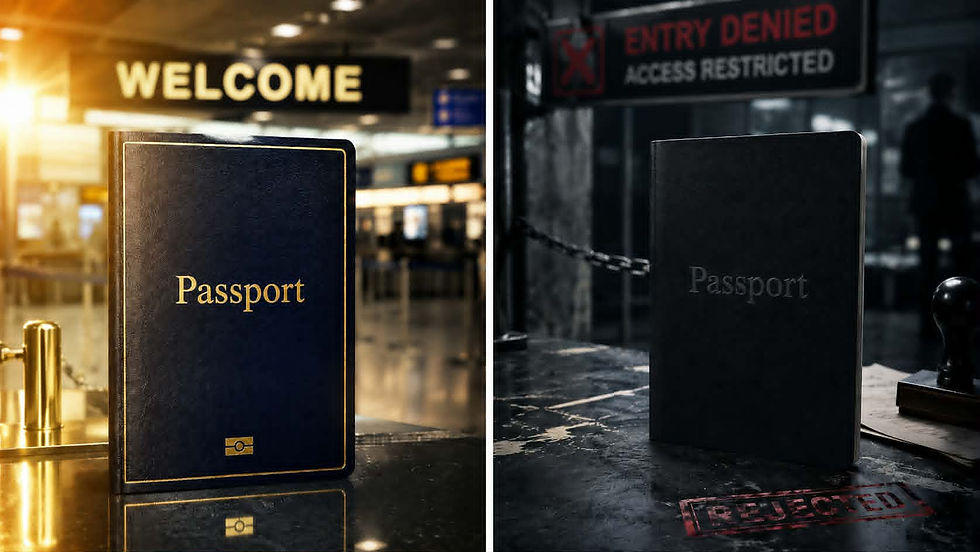
There does appear to be greater scrutiny of certain passports. Applicants from some nationalities can be refused even when there is no obvious problem with their financial evidence or soft-power documents. Passports that appear to face increased scrutiny include: Israeli, Russia, India, Pakistan and Myanmar It has also happened to some Chinese passport holders, although the large majority of properly prepared Chinese applicants are still being accepted. This is an observation based on application outcomes, not a published Thai government policy. Nationality may not be the only factor. Officers may also consider: The applicant’s immigration history Previous overstays Travel history Country of residence Employment or income Source of funds The credibility of the course The possibility that the person intends to work illegally Whether the applicant is likely to comply with the visa conditions Applicants holding passports that attract additional scrutiny should prepare an especially strong and consistent application.
Financial and Course Requirements

You Need 500,000 Baht Applicants definitely need to demonstrate access to at least 500,000 baht or the equivalent in another currency. This has been a central DTV requirement from the beginning. Multiple official Thai embassy pages continue to publish a financial requirement of at least 500,000 baht. Do not rely on: Cryptocurrency holdings Crypto-exchange screenshots Share portfolios Investment accounts Pension valuations Property valuations Credit-card limits
The safest evidence is money held in a normal savings or current account in the applicant’s name. How Long Must the Money Be in the Account? This varies considerably between embassies. Some embassies require the balance to remain at or above 500,000 baht for: One month Three months Six months Applicants should research the exact embassy they intend to use. Not every embassy clearly publishes the required holding period, but that does not mean the requirement does not exist. An embassy may request earlier statements after the application has been submitted. Other embassies ask for up to six months of bank statements without necessarily requiring the balance to remain above 500,000 baht throughout the full period. In these cases, they may be looking for healthy working accounts that demonstrate that the applicant: Receives regular income Uses the account normally Has adequate savings Can support themselves comfortably in Thailand Has not temporarily borrowed the full balance immediately before applying. A statement showing normal income and expenditure can be stronger than an inactive account into which exactly 500,000 baht suddenly appeared a few days before the application.
Explaining Where the Money Comes From Even though the application is based on a soft-power activity, the embassy may ask where the applicant’s money comes from and how they will sustain a prolonged stay in Thailand. This can happen to: Retired applicants Self-employed people Business owners Applicants without a conventional monthly salary People supported by savings Applicants who recently sold property or investments People receiving family support Applicants with irregular income A clear and honest cover letter will usually be sufficient, particularly when the explanation makes sense alongside the bank statements. The applicant should explain: Their employment, business, pension or savings position Where the money originated How long they intend to stay in Thailand How they will pay their living expenses Why their income does not require illegal employment in Thailand The explanation must be truthful. There is no need to make a normal financial situation sound more complicated than it is.

DTV VisaSoft-Power Course Documents By now, experienced gyms should understand which documents embassies generally like to see. The official core requirement is proof of confirmation or acceptance for the qualifying soft-power activity. However, individual embassies can request considerably more supporting evidence. A complete Muay Thai soft-power application package should ideally include:
Invitation or acceptance letter A formal letter confirming the applicant’s enrolment, course dates and training arrangement.
Payment receipt Evidence showing that the course has been purchased and paid for. Itinerary and curriculum A clear description of the course, subjects studied, training frequency, course duration and expected progression.
Photographs of the gym and a map pin Evidence that the gym is a real operating establishment at a genuine location.
Sports Authority of Thailand gym-registration certificate Proof that the gym is registered with the relevant sports authority.
Gym owner’s sports-authority identification card Supporting evidence connecting the registered gym to its owner.
Board of Boxing Sport head coach’s licence Evidence that the head coach is properly recognized and licensed.
Ministry of Labour Department of Skill Development Muay Thai instructor certificate Evidence of a recognized professional Muay Thai teaching qualification.
Gym owner’s Thai identification card A copy of the owner’s official Thai ID.
Limited-company registration certificate Evidence of the legal company behind the gym or course provider.
Department of Business Development company certificate Current company-registration information from Thailand’s Department of Business Development.
VAT registration The company should be properly VAT registered where legally required. Thai government gym-directory registration The gym should be registered on the relevant Thai government Muay Thai gym directory, such as the “Now Muay Thai” system or its current equivalent.
Not every embassy asks for all these documents. However, a gym that regularly supports DTV applications should be able to provide a professional and comprehensive document package rather than only an invitation letter and receipt.
The Muay Thai Visa Sports-Authority Letter. Before the DTV was introduced, Thailand had introduced the Muay Thai visa. a Muay Thai visa-support system under which the gym submitted the applicant’s information to its local sports-authority office. The sports office then issued an individual letter supporting that specific applicant. Since the DTV was introduced, this earlier Muay Thai visa system has become largely unnecessary. DTV applications do not require the personal sports-authority letter. However, some embassies occasionally ask for it. In theory, any appropriately registered gym can approach its provincial sports office and request an individual letter. In reality, the process can involve: A waiting list of three or four months Repeated visits to the sports office Considerable paperwork Staff waiting at government offices Uncertainty over when the letter will be issued For many gyms, the administration and waiting time make it impractical. Applicants should therefore avoid an embassy known to insist on this letter unless they already have access to it or are prepared for a substantial delay.
Proof of Accommodation in Thailand Some embassies ask for evidence of accommodation in Thailand. This is not usually a serious problem. Applicants can: Book a hotel Provide a rental agreement Ask the gym whether it offers accommodation Ask the gym for an accommodation-confirmation letter Provide a booking near the training location Whenever possible, choose a booking that can be cancelled or amended. Do not make a large non-refundable accommodation payment simply because an embassy has asked for an address. Gym Confirmation Emails An embassy may contact the gym and ask it to confirm that the course is genuine. This is nothing to worry about. The embassy is usually checking that the applicant has not: Forged the course documents Copied another applicant’s paperwork Altered a genuine document Purchased documents from an unauthorized agent Used a gym’s name without its knowledge The gym should reply quickly and confirm: The applicant’s full name Passport details, when requested Course duration Course payment Planned attendance Authenticity of the submitted documents An unresponsive gym can create unnecessary suspicion or delay.
Duration of Study

In the past, six months was generally considered the normal course duration because it matched the DTV’s initial 180-day period of stay. Recently, however, some embassies have been issuing multiple-entry tourist visas instead of DTVs for applicants whose courses last six months or less. The apparent logic is that a person can potentially complete a six-month course using a multiple-entry tourist visa, together with a border trip and any relevant in-country extensions. This is not happening in every case. Applicants are still receiving DTVs for six-month courses. However, it may not be worth taking the risk. We now recommend a course of at least nine months. A nine-month course: Extends beyond the initial 180-day stay Better supports the need for a long-term visa Demonstrates continuing soft-power involvement Reduces the argument that an ordinary tourist visa would be sufficient Usually costs only a relatively small amount more than a six-month course Some official embassies now expressly discuss minimum course lengths. Budapest, for example, states that a Thai cultural activity should last at least six months and warns that a shorter course risks refusal. A course longer than six months therefore gives the application a clearer long-term purpose.
Refunds

When the DTV was first introduced, most gyms had a policy of refunding the course fee only if the visa rejection was caused by a problem with the gym’s documents. That policy was understandable at the time. If the applicant was rejected because of poor finances, an unsuitable passport, immigration history or false personal information, the gym had still completed its work correctly. More recently, however, many gyms have adopted a broader refund policy and will refund the course fee if the DTV application is rejected for any reason. There are two main reasons for this. First, DTV rejections are now more common than they were at the beginning, and offering a refund simply seems like the fair thing to do. Second, rejection notices often do not clearly state why the application was refused. This makes it difficult to determine whether the rejection was caused by the applicant, the embassy’s interpretation or the course documents. Applicants should ask for the refund policy in writing before paying. They should check: Whether the full course payment is refundable Whether an administration fee is deducted Whether payment-processing charges are deducted Whether the embassy fee is excluded Whether a formal rejection notice is required How long the refund will take Whether the refund applies after training has already started Embassy visa-application fees are normally non-refundable, even when the visa is refused.
Re-entry or Extension?
In theory, a DTV holder can apply at a Thai immigration office to extend an initial 180-day stay for a further period of up to 180 days. In reality, obtaining the in-country extension can be considerably more difficult than obtaining the original DTV. The immigration office may request: Updated financial evidence Fresh soft-power documents Evidence of ongoing participation Accommodation documents Attendance records Additional forms Confirmation from the course provider Other documents at the officer’s discretion For most DTV holders, it is more practical to leave Thailand, take a break in another country and then re-enter for a new 180-day permission to stay. The DTV is a multiple-entry visa with five-year validity, so leaving and re-entering while it remains valid is part of its basic design. However, people who exit Thailand and attempt to re-enter on the same day are more likely to be flagged by immigration. A same-day border run can look as though the traveller left only to reset their permission to stay. This may lead to further questioning about: Their reason for holding the DTV Their ongoing activity Their finances Their accommodation Their history of staying in Thailand It is generally better to take a genuine trip outside Thailand rather than leave and return immediately.
Re-entry Issues

At one point there was near-hysteria online about DTV holders being aggressively questioned over their ongoing soft-power activity whenever they re-entered Thailand. That has not reflected the experience of most applicants. In our experience, approximately 95% of DTV holders have re-entered Thailand without being asked any questions about their course or ongoing activity.
However, it is true that a small number of people have been taken aside and questioned. They may be asked: Whether they are still training When they last attended Where their gym is located How frequently they attend Whether they have paid for the course Whether they can show evidence What they have been doing in Thailand Being questioned can be uncomfortable, but none of the applicants included in our experience have so far been denied entry solely because of soft-power attendance concerns. We have also never been contacted by immigration, either by telephone or in person, and asked to confirm an individual student’s attendance. If immigration does question a DTV holder on re-entry, the responsibility appears to be on the traveller to provide evidence of ongoing soft-power activity. Useful evidence can include: Course receipts The original acceptance letter Updated training receipts Time-stamped photographs Training videos Social-media posts Messages with the gym Attendance records Certificates A student account on the gym’s website or application Evidence of online study or continued training There is no need to carry a huge paper file on every journey, but it is sensible to keep digital copies on the phone. Separate Forms at Certain Airports Some ports of entry, including Chiang Mai International Airport, sometimes direct DTV holders to one side. This does not necessarily mean the traveller is under investigation. In many cases, the person is simply asked to complete a short form containing basic information about: Their DTV category Their activity Their accommodation Their course provider Their intended length of stay Complete the form calmly and answer honestly.
Is Soft-Power Activity Compulsory?

The visa was obtained on the basis that the applicant intended to study Muay Thai or participate in another qualifying soft-power activity. The holder should therefore make a genuine effort to participate. The applicant has also paid for the course, so there is little reason not to use it. However, the DTV is also a type of long-stay tourist visa. Official embassy guidance describes it as a five-year multiple-entry visa for people taking part in qualifying Thai soft-power activities. DTV holders are encouraged to travel around Thailand. It is not the same as a traditional Education visa, under which students may be expected to attend a registered school on a formal weekly timetable with stricter monitoring. Diligent attendance at exactly the same time every week should not be necessary for a flexible Muay Thai soft-power course. A suitable gym should allow the student to take classes according to: Their travel itinerary Their fitness and health Their personal schedule The course activity program Periods spent in different parts of Thailand Any agreed flexibility within the curriculum For example, a student might train intensively for several weeks, travel for a month and then return to continue the course. That is more consistent with the purpose of the DTV than expecting the person to remain in one location for the whole year. The important point is that the course should be genuine and the student should make a reasonable effort to participate. Activity After the Original Course Expires A good provider should offer some form of documented continued-training program after the original course period has expired. This might include: A shorter renewal course Pay-as-you-go sessions A monthly training plan Online tutorials Assessments Training records Access to a student platform Occasional refresher sessions An extended flexible activity program This means that a DTV holder who is anxious about proving current activity can maintain evidence without purchasing the entire original course again.
Can I Move Gyms?

There appears to be no general requirement that a DTV holder must train at the same gym throughout the five-year visa period. The DTV encourages people to travel around Thailand rather than remain permanently in one location. It therefore seems reasonable and entirely consistent with the visa’s purpose for a person to study at different gyms while travelling. For example, someone may: Begin training in Chiang Mai Spend time training in Bangkok Visit a camp in Phuket Train for several weeks in Isaan Attend seminars with different instructors Return periodically to the original gym However, applicants should understand the difference between moving gyms and never genuinely participating in the original course. The original DTV was approved using documents supplied by a particular provider. The holder should therefore retain: The original course documents The original receipt Evidence of some participation with that provider Communications relating to the course Evidence from any additional gyms There is nothing obviously wrong with training at more than one gym. In fact, experiencing different gyms, trainers and regional styles can be a valuable part of studying Muay Thai in Thailand. The safest approach is to participate genuinely in the original course while remaining free to train elsewhere during travel.
Final Advice
The DTV remains one of the most useful visa options available to people who genuinely want to spend extended periods in Thailand while studying Muay Thai or participating in another qualifying soft-power activity. It is still being approved regularly. However, applications are no longer as simple or predictable as they were when the visa was first introduced. A strong applicant should have: At least 500,000 baht in genuine accessible funds Clear and healthy bank statements An honest explanation of their financial circumstances A course lasting at least nine months where practical A complete package of gym and company documents A course provider that responds quickly to embassy emails Evidence of genuine interest in the soft-power activity Flexible travel plans Sufficient time for processing A written refund agreement Digital evidence of training available for future re-entry Choose the embassy carefully. Do not assume that every Thai embassy interprets the DTV in the same way. Most importantly, purchase a genuine course from a properly established provider and make a reasonable effort to participate. This produces a stronger original application and places the visa holder in the best possible position if questioned during a future entry into Thailand. This article is based on practical application experiences and information available in August 2026. It is general information and not legal or immigration advice. Requirements and embassy practices can change, and all visa, extension and entry decisions remain at the discretion of the relevant Thai authorities. This now retains the strong practical details instead of reducing them to general embassy advice.


Comments